- 23rd February 2026
- min read
10 Office Design Trends that Drive Productivity
Employees are now expecting more from their working environments. This article will dive into recent trends AIS have identified that balance design innovation with business outcomes.
Employees are now expecting more from their working environments. We are seeing spaces transform into experiences, prioritising well-being, productivity, and collaboration, not just task-based work. As the ways of working have changed, office design trends must keep up. Now hybrid working is almost a formality, spaces must support those in person and online, whilst still forming a sense of belonging and culture.
Whilst individuals’ needs vary, the foundation of a productive office does not. Aligning people, purpose, and performance is key to driving productivity, and interior design decisions must support these three pillars. This article will dive into recent trends AIS have identified that balance design innovation with business outcomes.
1. Flexible and adaptive workspaces
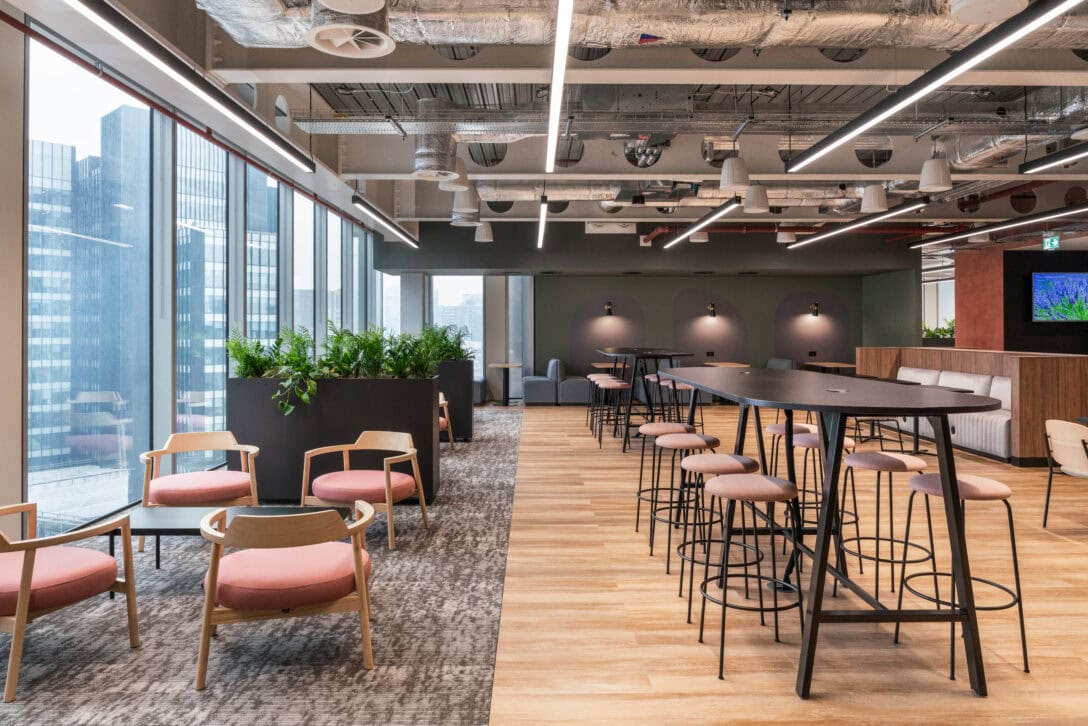
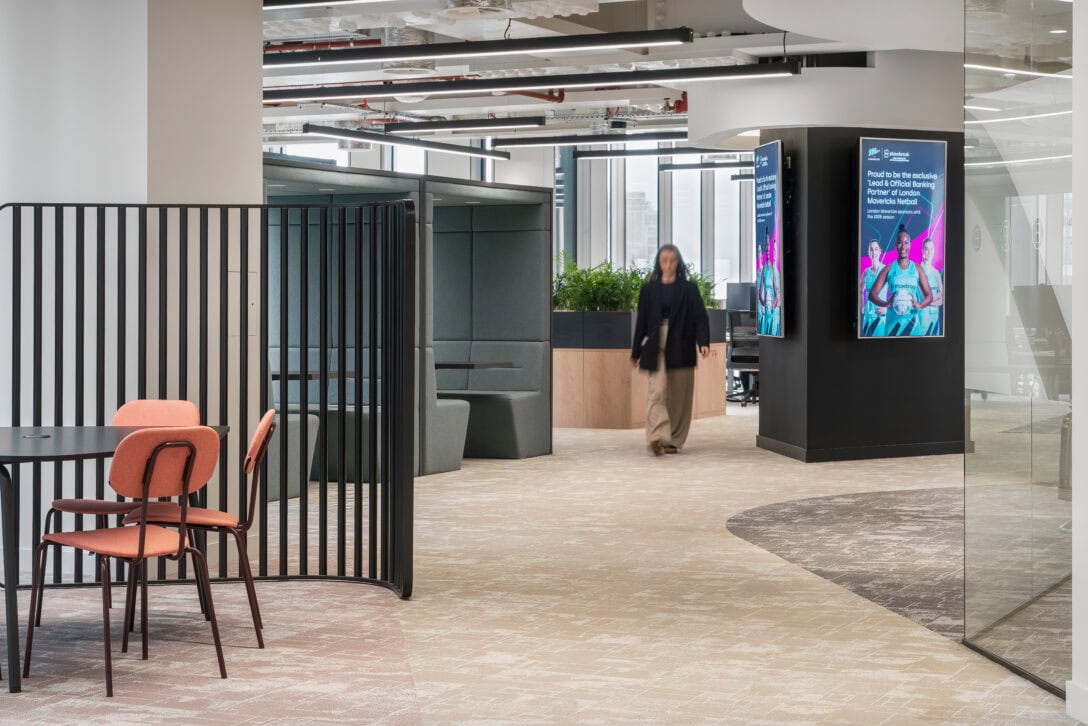
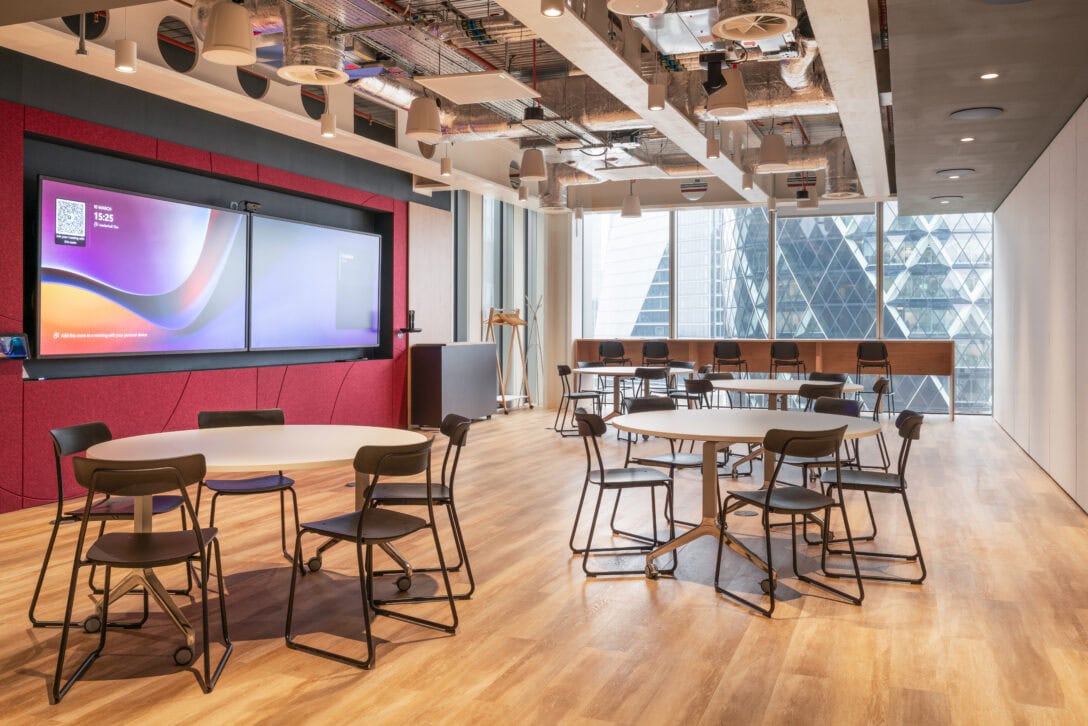
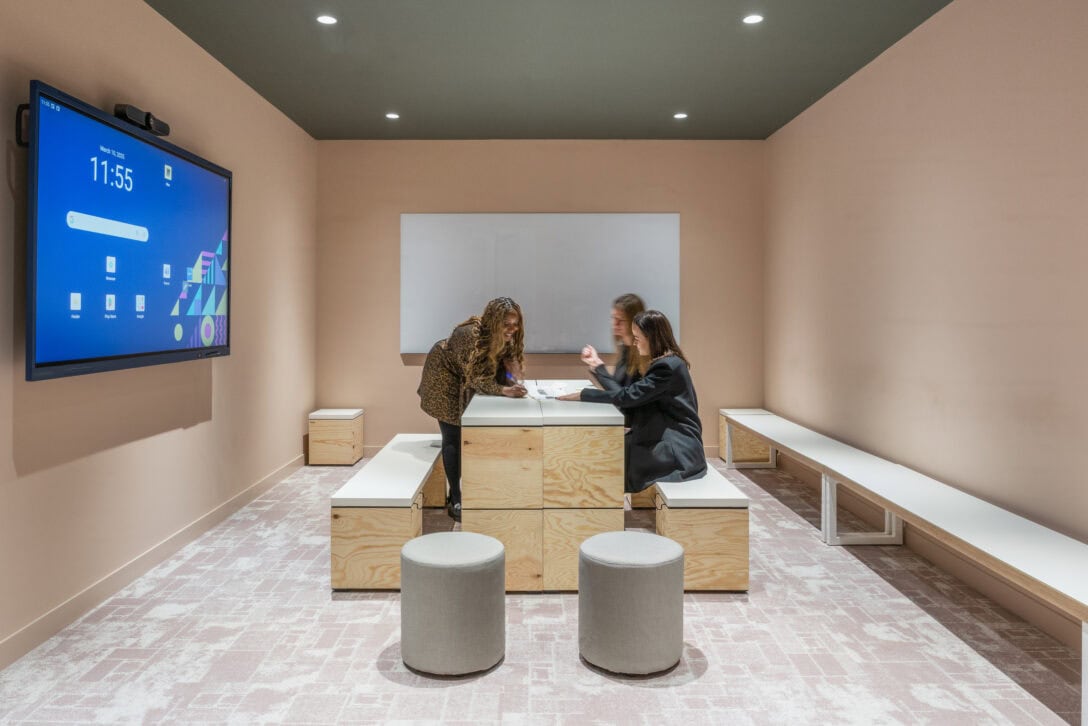
Collaboration has moved on from gathering around a high table, it is about creating a space for people to think differently. By creating different settings, environments and provoking different feelings across areas, productivity can be supported. However, not many floorplates have been designed to support these spaces permanently. To overcome this issue, focus booths, social areas and project rooms are created with flexibility and adaptivity at the forefront. By using modular and scalable furniture, spaces can be multi-use and adapted to your needs at the time.
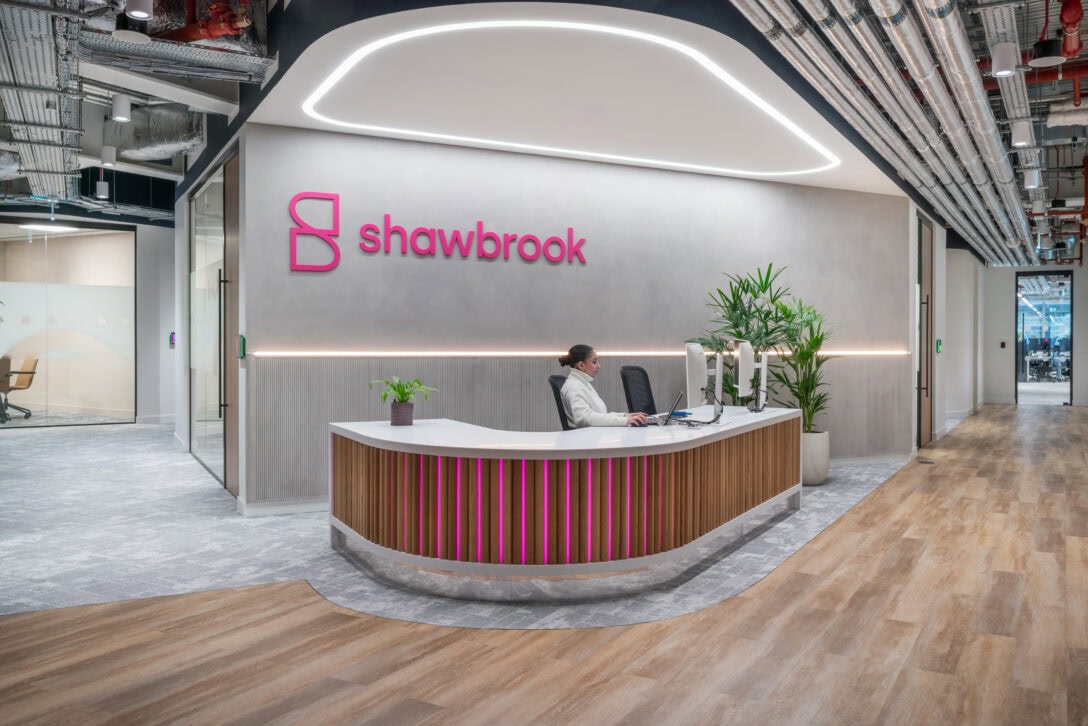
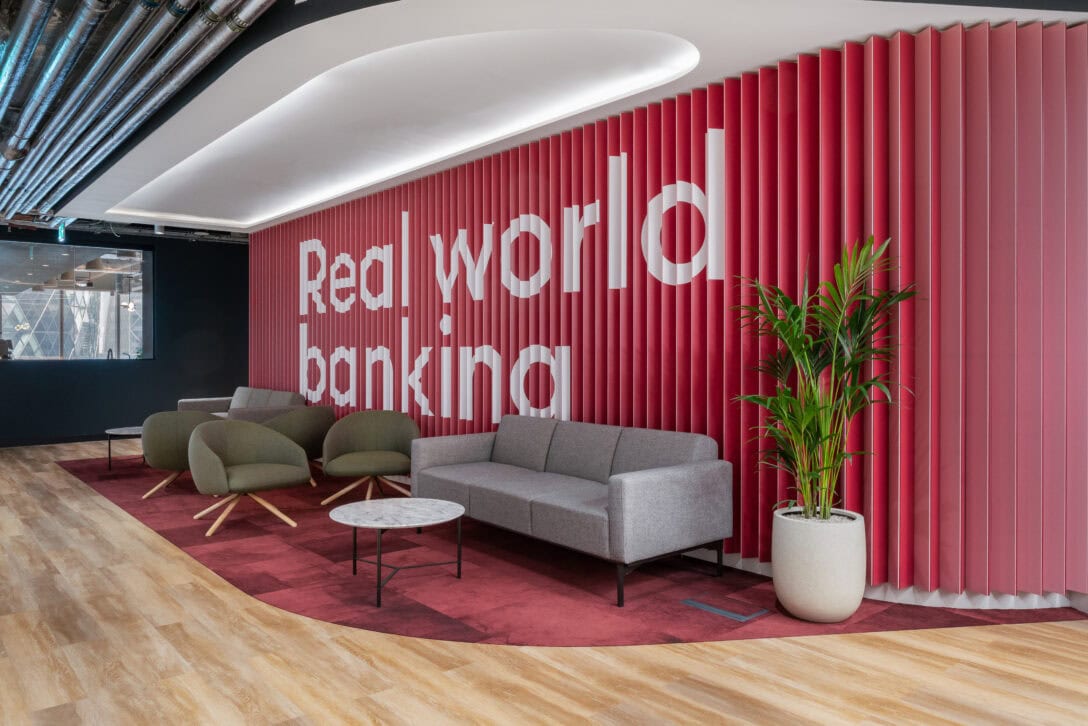
Shawbrook Bank, have utilised its space with a collaboration area made with building block-style furniture. This can form rows of benches for presentations and be stacked into a table set up for activity-based working within minutes. This flexibility maximises space and is budget-friendly, whilst supporting productivity.


2. Designing for wellbeing
With wellbeing now a key focus of many lifestyle choices, embedding this into the workplace is important for sustainability but also for talent selection and retention. During the initial design phase, wellbeing rooms are incorporated; however, what we tend to see is them becoming the first to be pushed or downgraded when budget considerations are made. Often, they result in being a sink and a chair in a room at the core of the building with little natural light. Designing for wellbeing is improving when it comes to WELL Building Standard Principles, designing for air quality, ventilation and movement, yet we are still seeing that the space and rooms to support emotional wellbeing are behind the curve, but will soon be as much of a focus as the physical aspects. Revolut, for example, offer a gym, sauna, steam room, wellness room, prayer room, and whilst not all spaces are able to facilitate these amenities, the shift to prioritising employee wellbeing is evident.
3. Acoustic zoning
Noise levels are a key hindrance to productivity levels. Working in an open-plan space where conversations and noise surround you affects concentration. We have recently seen an increase in acoustic pods, ceiling baffles and sound absorbing panels being used in spaces. One particular project AIS recently completed stated from the beginning that “if the acoustics aren’t right, then the project is a failure”. For this Global Insurance Provider, each meeting room had to be created with the highest spec acoustic rating in order to ensure privacy and confidentiality. Not only does this increase productivity but also increases comfort in the office space for employees and visitors.
4. Smart technology integration
Digital booking systems are a key feature, enabling staff to reserve desks, meeting rooms, or collaborative spaces in real time. These systems are often connected to sensors that confirm whether a space is actually in use, releasing it if it is left empty. This creates an IoT-enabled environment where devices communicate with each other to optimise energy efficiency and space utilisation across the workplace, reducing the chase for a meeting room (we’ve all been there) or wandering across the space to find an available room. Improving this experience allows employees to arrive at meetings on time, have a clear agenda of where to go and remove a potential barrier which is seen to cause friction by being in the office.
5. Human-centric lighting
You commonly hear of offices being referred to as having “hospital lighting”, that sterile, bright white light that often gives you a headache, causes discomfort and can reduce concentration throughout the day. Workplaces are now embracing a warmer light and varying light levels across spaces to support how people work. Collaboration and breakout areas may use a slightly warmer light to encourage relaxation, while meeting rooms and open plan areas maintain balanced lighting for focus. By creating a more inviting environment, this improves well-being and comfort, supporting employees to be engaged throughout the day.
6. Sustainable and circular design
Suppliers are increasing their sustainable offerings with their reuse and recycle schemes, which enable us to reduce the environmental impact projects have whilst minimising disruption and downtime during refurbishments. One project recently completed at the National Gallery is a perfect example of these schemes in practice. A 300-seater theatre, the seats were sent to be re-upholstered and then re-fitted back into the space, allowing the venue to return to use quicker. Achieving accreditations such as BREEAM, WELL and NABERS plays a part in design and ensures sustainability criteria is met in advance of the build. A project complete in the JJ Mack Building for a Global Travel Provider is an example of how building and internal design can complement to become an efficient and sustainable space, with the JJ Mack building being recognised as one of the most sustainable office buildings in London.
7. Biophilic design
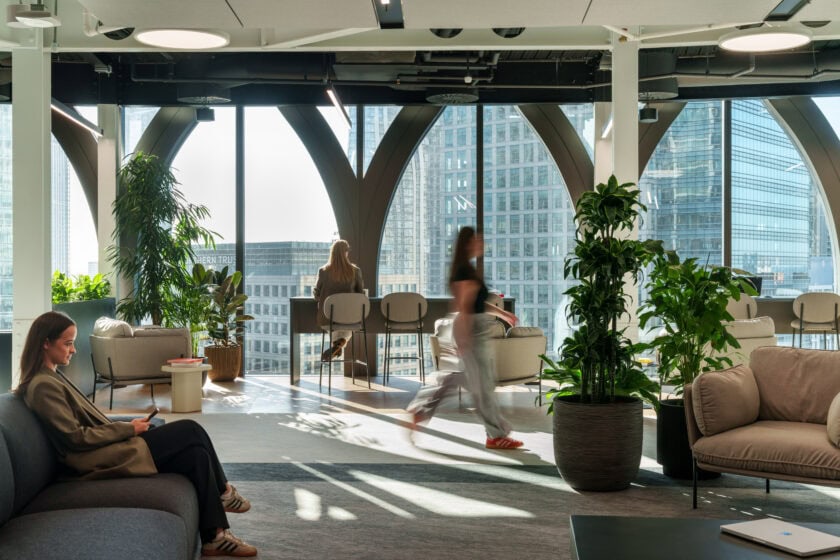
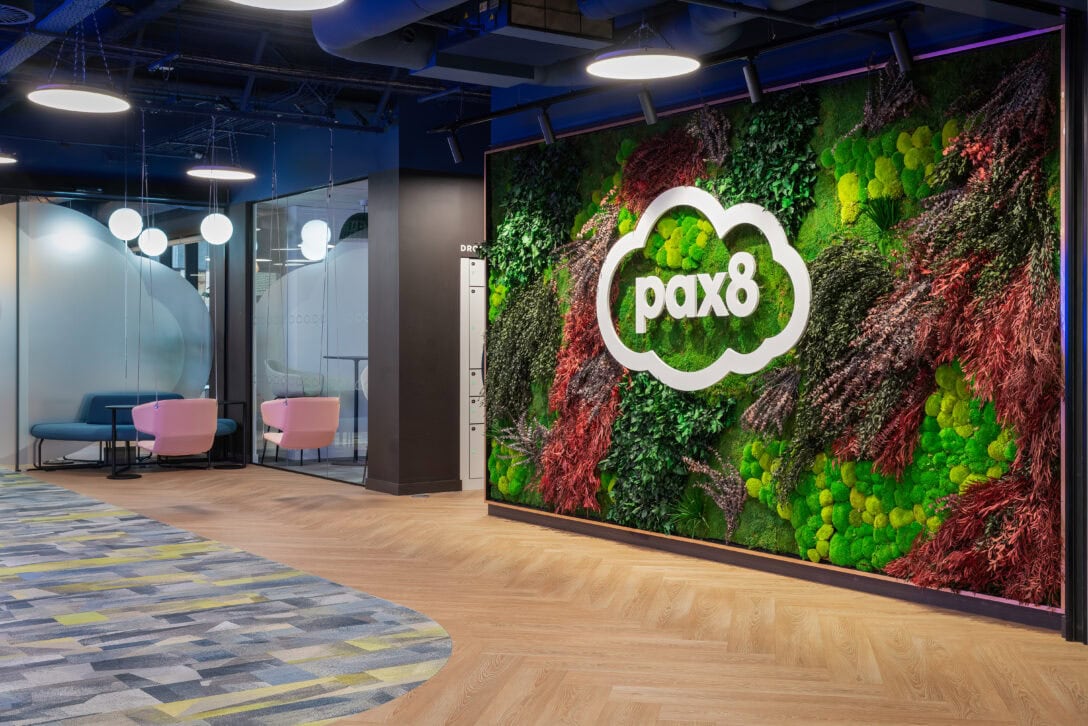
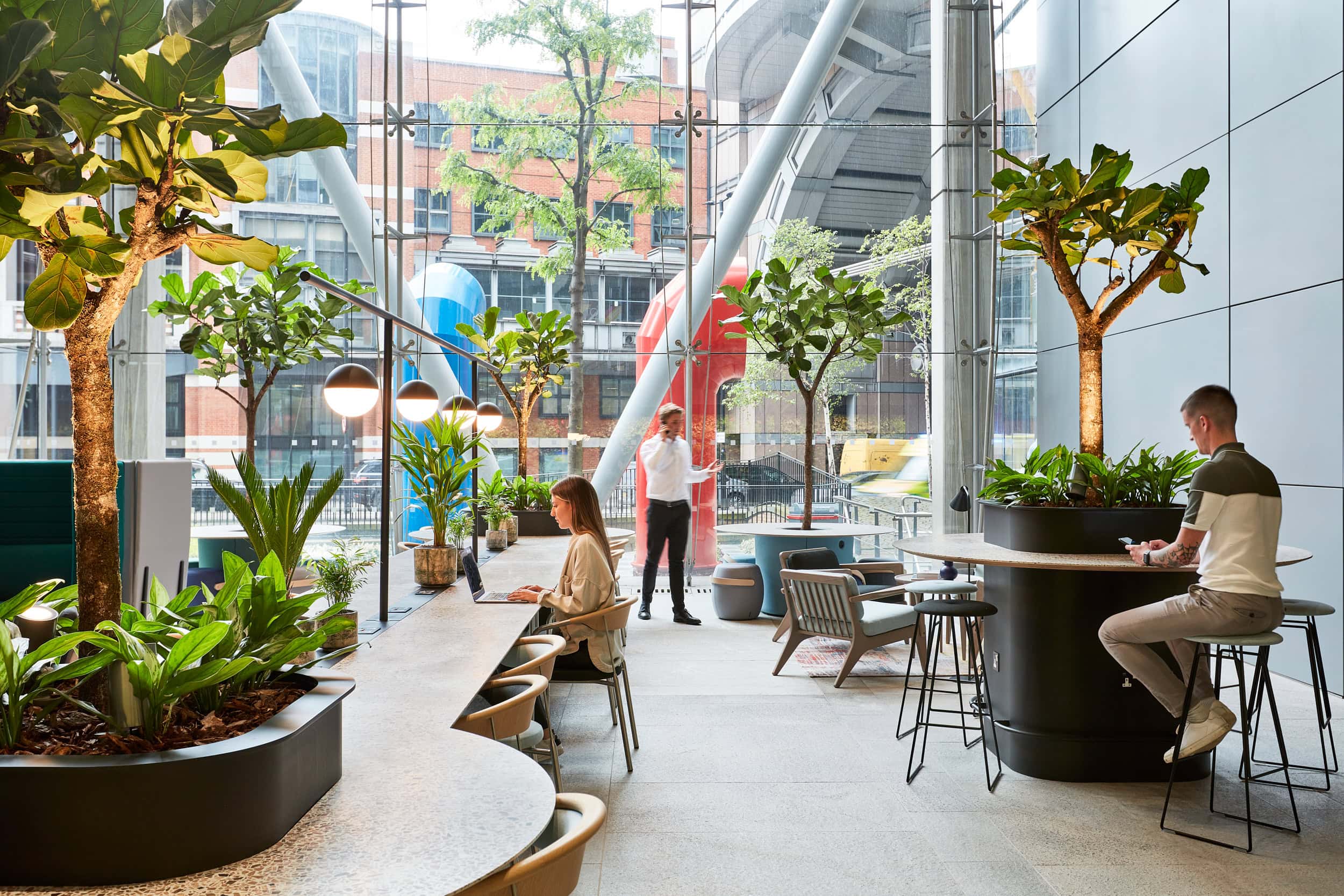
Biophilic design is a growing workplace trend that boosts productivity by reconnecting people with nature inside the built environment. Research consistently shows that exposure to natural elements improves well-being, lowers stress, and supports creative thinking. In practice, this is achieved through features such as indoor planting, living walls, natural textures like wood and fibres, and maximised daylight. Large planters and vertical green walls soften hard architectural lines while also improving air quality and acoustics, creating calmer and more comfortable spaces.
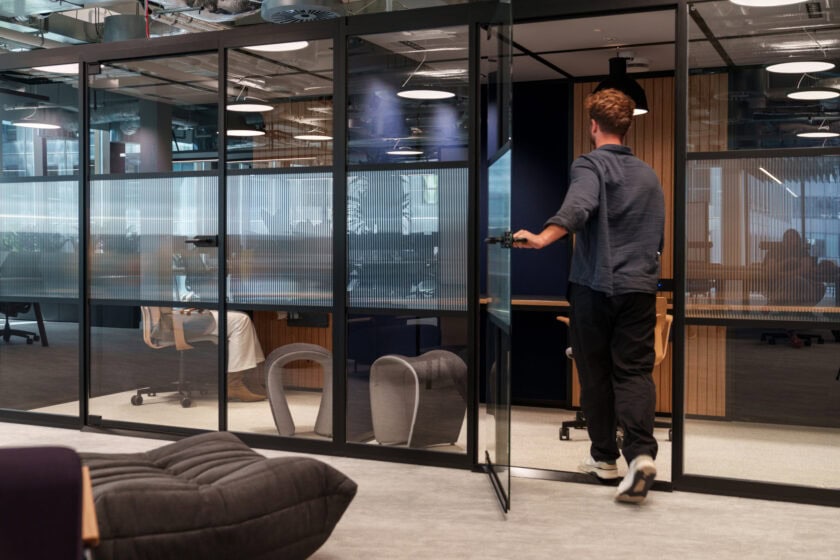
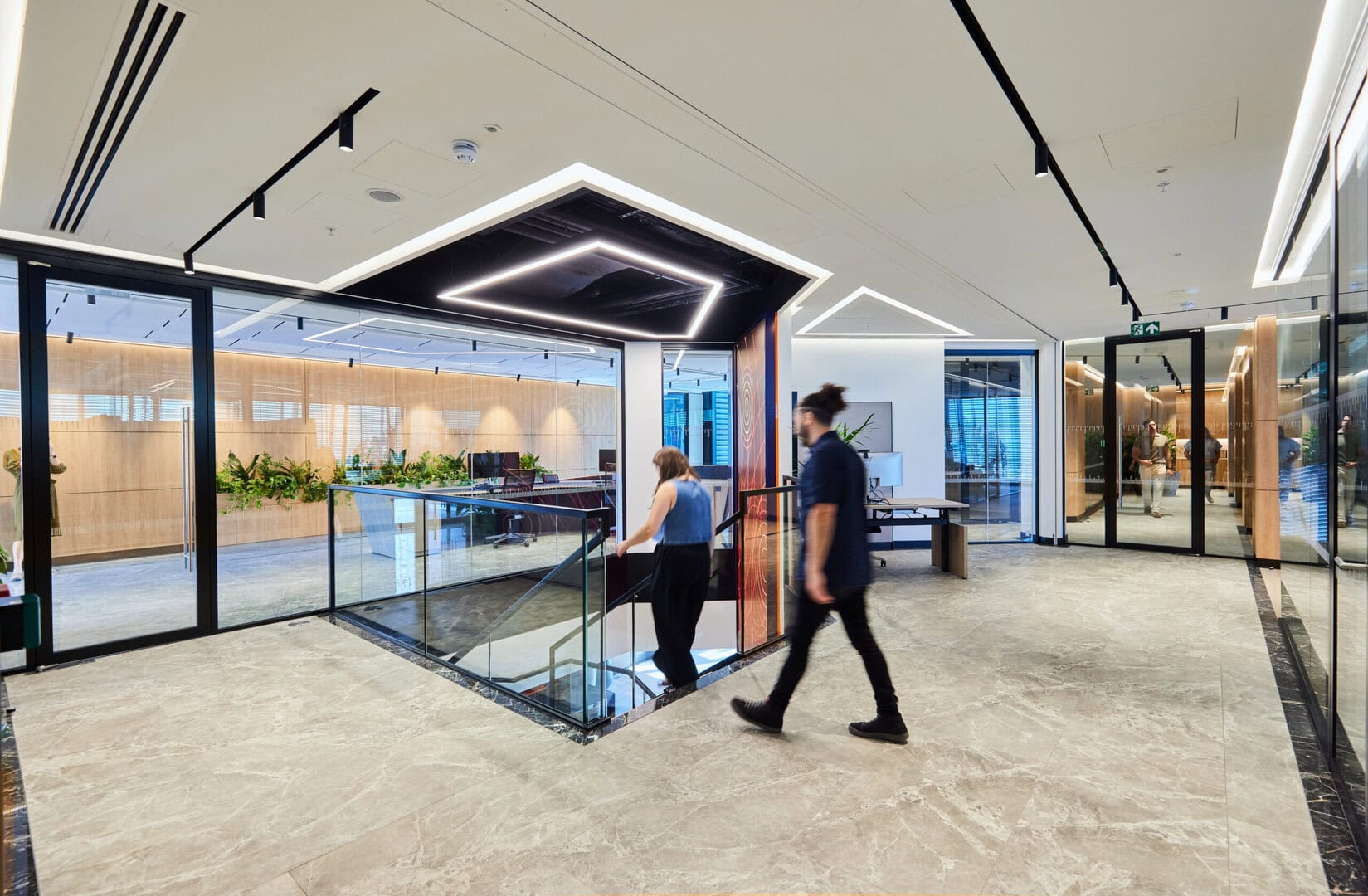
Daylight maximisation is especially important. Using glass-enclosed meeting rooms instead of solid walls allows natural light to penetrate deep into the floorplate, reducing reliance on artificial lighting and making spaces feel more open and energising. Thoughtful layout planning, taking into account building cores, structural pillars, and circulation routes, ensures these natural elements are placed where they will have the greatest impact without sacrificing usable space.
A strong example is the AIS project for the Pax8, which integrated planting, natural materials, and a living wall to create a calming environment that reduced stress and supported focused, collaborative work.
8. Culture-driven design
The key is creating memorable spaces rooted in user-centric design and clear expressions of a company’s core values. Authenticity begins with truly understanding clients - their ambitions, their identity, and the experience they want to deliver for everyone who interacts with the space, from team members to visitors and future talent.
9. Global inspiration
There is a broad range of design options and styles that draw heavily on cultural and geographic influences, such as Scandinavian minimalism, Japanese Zen principles, or the open, innovation-driven aesthetic often associated with Silicon Valley. These distinct design languages provide a strong starting point and can be carefully selected and adapted to suit the nature, values, and working culture of an organisation.
Once a core design direction is established, it can be applied across the business in a way that supports both brand consistency and cultural relevance. For global organisations in particular, this approach allows design principles to be scaled across multiple offices while remaining sensitive to local context. Each location can reflect the country or city it is based in using regional materials, local craftsmanship, and culturally resonant design elements, without losing alignment with the overarching brand identity.
This creates a unified yet flexible design standard that ensures coherence across global offices while still allowing for variation and individuality. A strong example of this approach can be seen in a global insurance provider that described its workplaces as “cousins, not sisters.” Rather than replicating identical interiors, we applied a shared design framework that was adapted in each location, taking inspiration from local materials and craftmanship to create spaces that feel both globally connected and locally authentic.
10. The future of office design
Leeson Medhurst, Chief Strategy Officer at AIS, describes how far this could go. “We can expect to see more emphasis on using data to create hyper-personalised adaptive workplaces. Most of us wear a smart watch or ring daily, or at the very least, we have a mobile phone tracking our movements. If you pair the data from those devices with sensors around a workplace, we can reconfigure spaces in real-time based on the immediate needs of its users.
As cited in the recent WORKTECH Academy Trend Report, researchers in the US have already proved it’s possible by monitoring cues such as facial expressions and speech to then adjust elements like lighting and sound to create the perfect setting. Making these changes means spaces can shift in the moment to support collaboration or focus, whichever is needed. Not only does this put wellbeing front and centre of the workplace conversation, but it also supports employee engagement and productivity and, crucially, means that designs offer greater longevity and a better return on investment.”
In other words, 2026’s “office perk” may not be a ping-pong table, but an environment that quietly protects your energy.
Summary
Acoustic zoning, biophilic design and human-centric lighting all contribute to the physical environment someone is exposed to, which supports productivity. Other aspects such as smart technology integration, adaptivity and wellbeing design all provide a more seamless experience for users, which encourages them back to the office and supports efficient working. The branding and design principles enable a sense of feeling and cultural belonging, all of which support employee wellbeing and productivity.
Research and Insights
The reality of adaptive workplaces
How to Manage Change in the Workplace